Redesigning Capiter’s seller portal to help wholesalers manage inventory, orders, payments, and returns with less dependency on account managers.
Role
Senior Product Designer
Company
Capiter
Timeline
2021–2022
Platform
B2B Seller Portal
Contribution
Research · UX · UI · Prototyping
Product
Wholesale marketplace operations
01 The Challenge
Wholesalers relied heavily on account managers to run everyday operations.
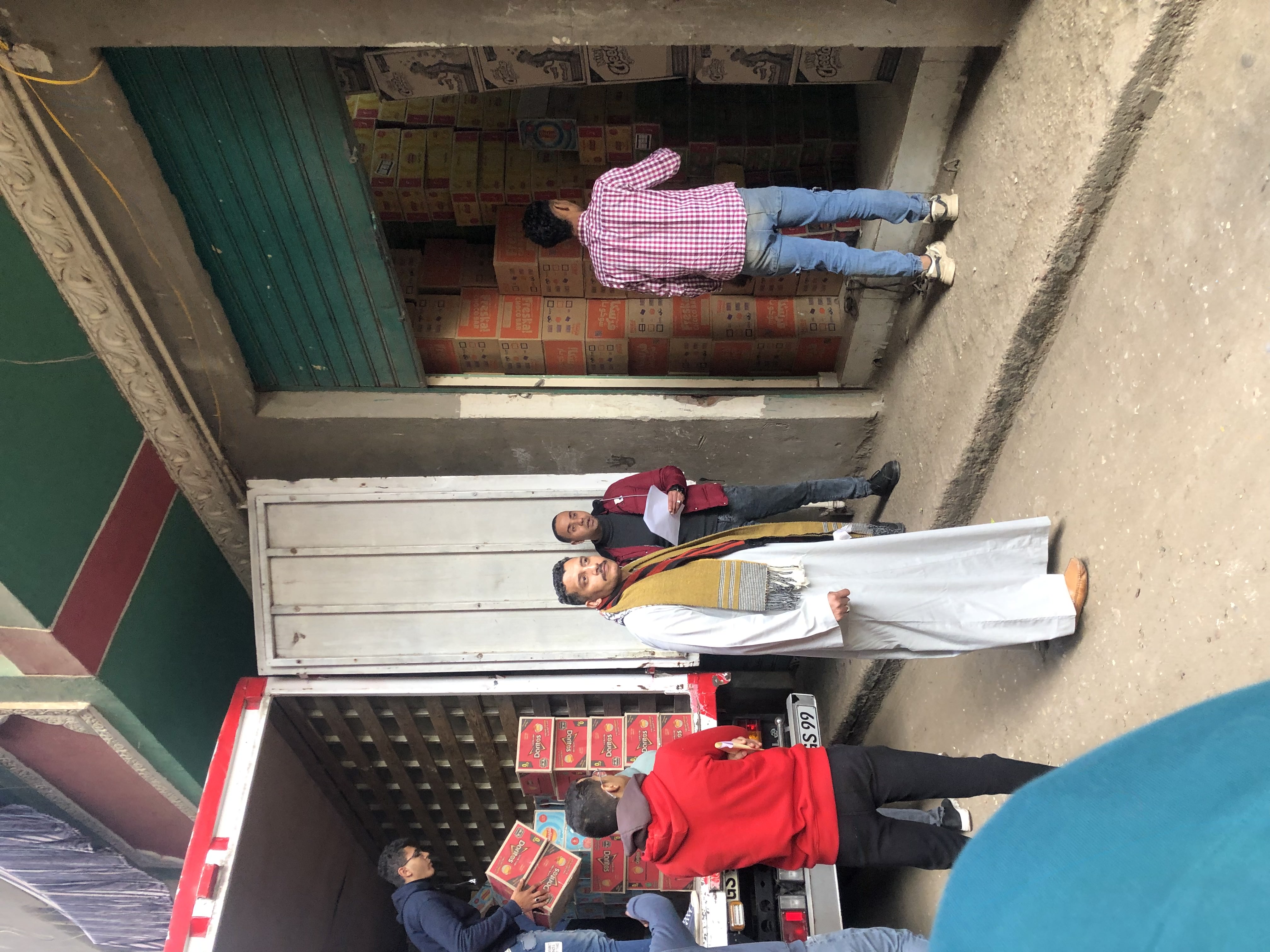
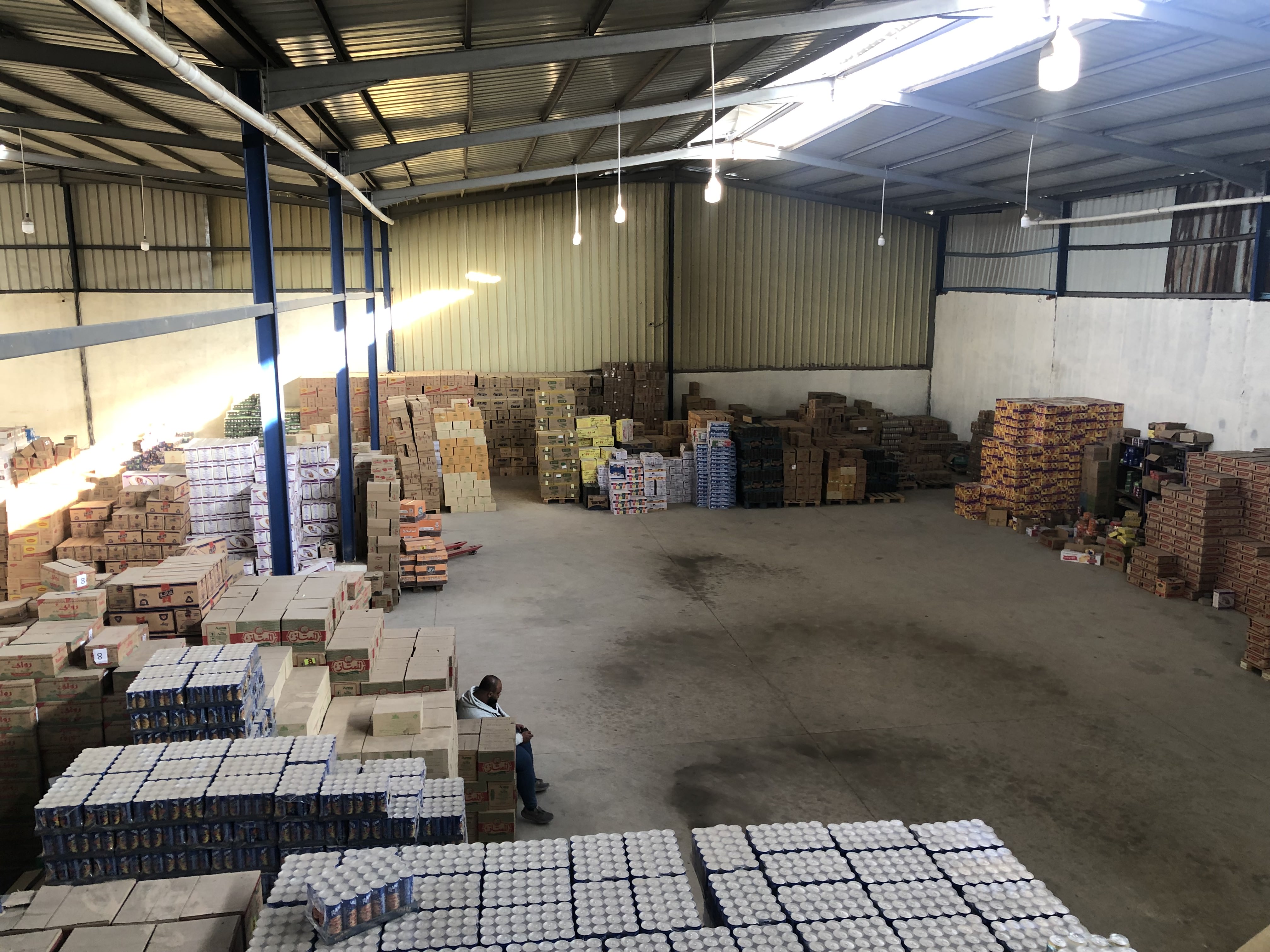
Capiter’s seller portal already existed, but wholesalers had limited control over their business. Important tasks — such as updating inventory, tracking orders, and understanding payments or returns — often required support from account managers.
For wholesalers
Limited visibility and control over daily operations.
For Capiter
High operational dependency on account managers as the business scaled.
Our challenge
How might we give wholesalers more control while reducing operational dependency on Capiter’s team?
02 Understanding the Problem
I started by understanding how wholesalers actually worked.
We interviewed wholesalers and account managers and reviewed the existing seller portal to understand where everyday operations were breaking down.
What we heard
“I can’t track my orders and invoices.”
“I don’t know why some products are returned.”
“Updating stock and prices depends on the account manager.”
03 Key Insights
Three problems kept showing up.
01
Lack of visibility
Wholesalers couldn’t easily track orders, invoices, and returned products.
02
Limited self-service
Basic operations such as updating stock and prices depended on account managers.
03
Operational complexity
Information was fragmented, and some terminology wasn’t clear to wholesalers.
This gave us a clear direction
Make the seller portal a place where wholesalers could understand, manage, and act without needing constant assistance.
04 Product Opportunities
What should we solve first?
Research insightProduct opportunity
Returned products were unclearMake returns transparent
Orders and invoices were difficult to trackCreate operational visibility
Stock updates depended on account managersEnable self-service inventory
Registration addresses were inaccurateImprove location capture
We also reviewed comparable B2B and e-commerce products to understand common patterns for inventory, orders, and reporting.
05 Design Decisions
The core of the case study.
Design Decision 01
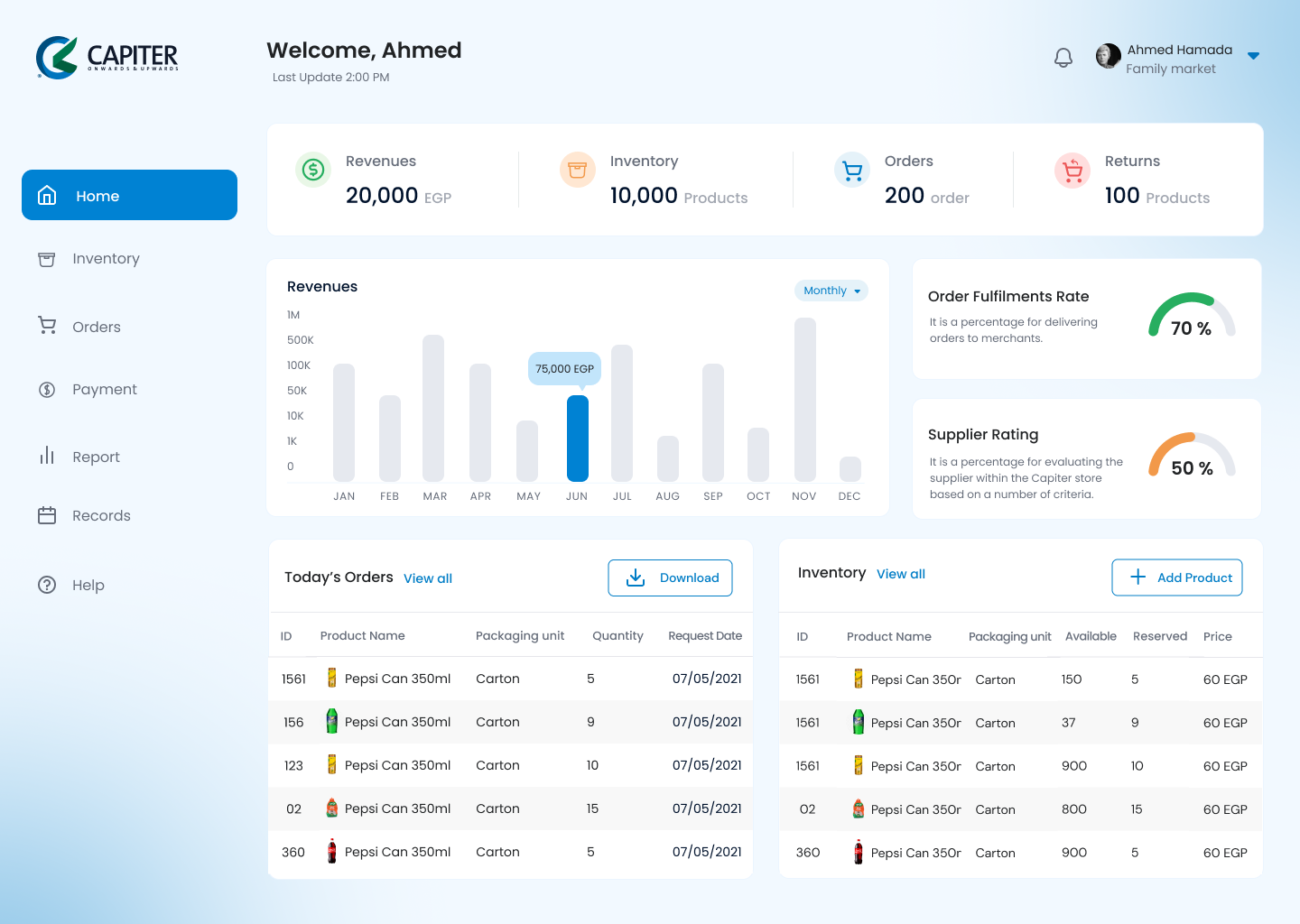
Give wholesalers a business overview
Problem
Wholesalers had no quick way to understand how their business was performing.
Design decision
I redesigned the home dashboard around the information they needed most frequently: revenue, inventory, orders, and returns.
On the screen
Revenue at a glance
Inventory visibility
Today’s orders
Quick product actions
The goal wasn’t to show more data — it was to surface the information wholesalers needed to make daily decisions.
Design Decision 02
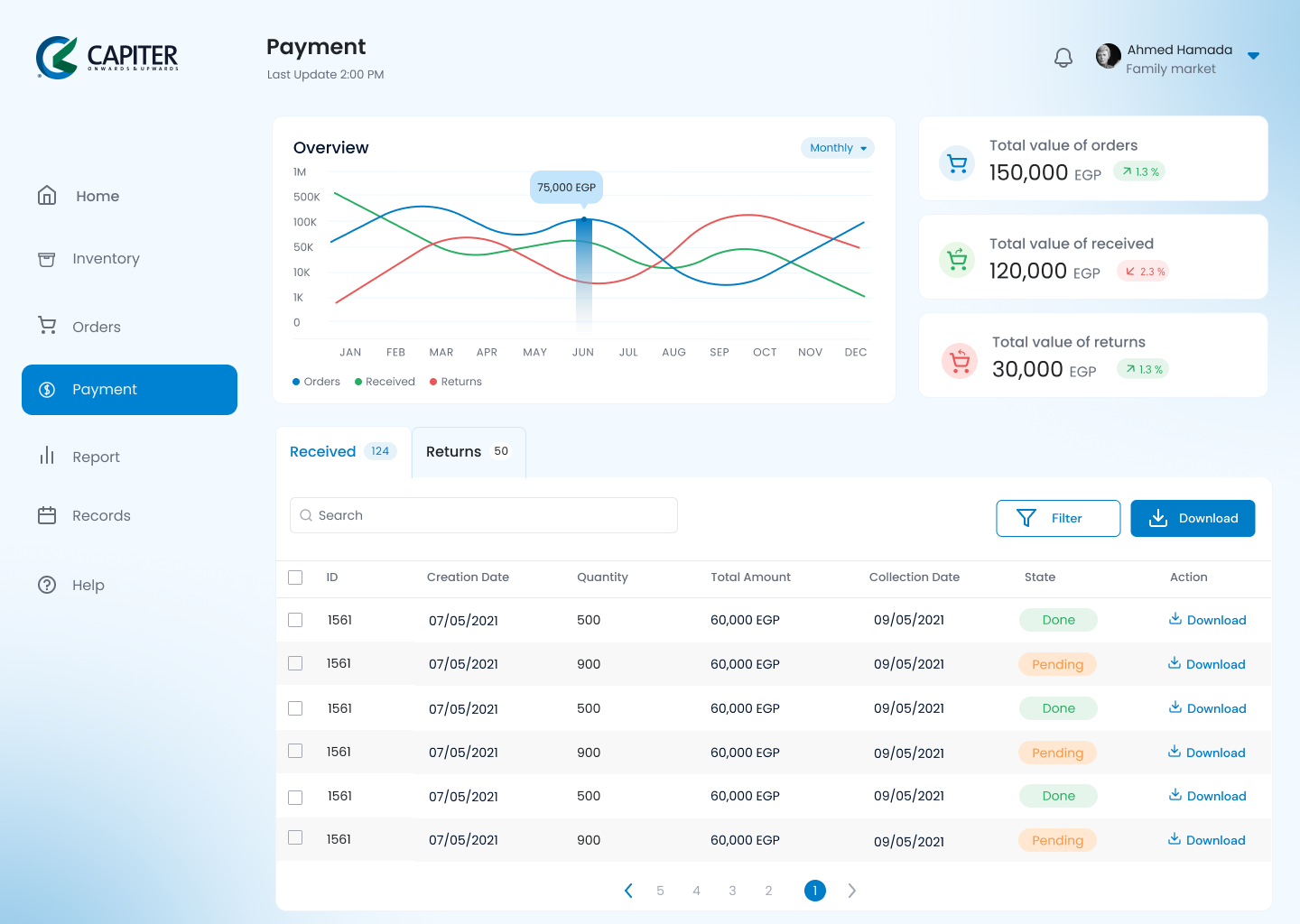
Make payments and returns traceable
Problem
Wholesalers struggled to understand what had been delivered, paid, or returned.
Design decision
I introduced a dedicated payment area combining high-level financial indicators with invoice-level details.
On the screen
Orders vs. received vs. returns
Invoice status
Downloadable records
Design Decision 03
Reduce friction during onboarding
Problem
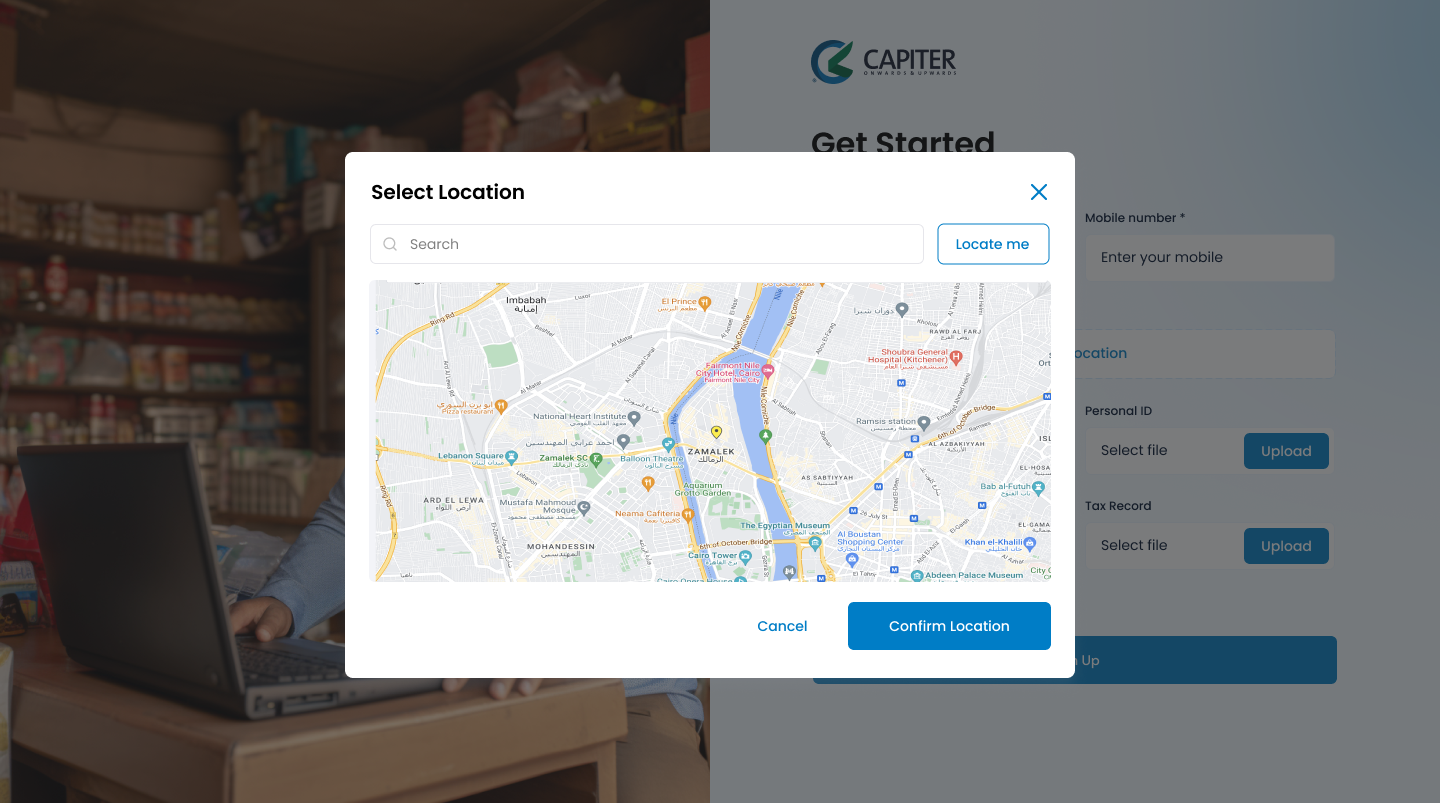
Wholesalers frequently entered inaccurate addresses during registration, creating additional work for the verification team.
Insight
A standard address field wasn’t enough.
Solution
I introduced map-based location selection, including a “Locate me” option, so wholesalers could provide a more accurate business location during registration.
The flow
1Enter details
2Select location
3Confirm
4Submit
Design Decision 04
Build trust before registration
Problem
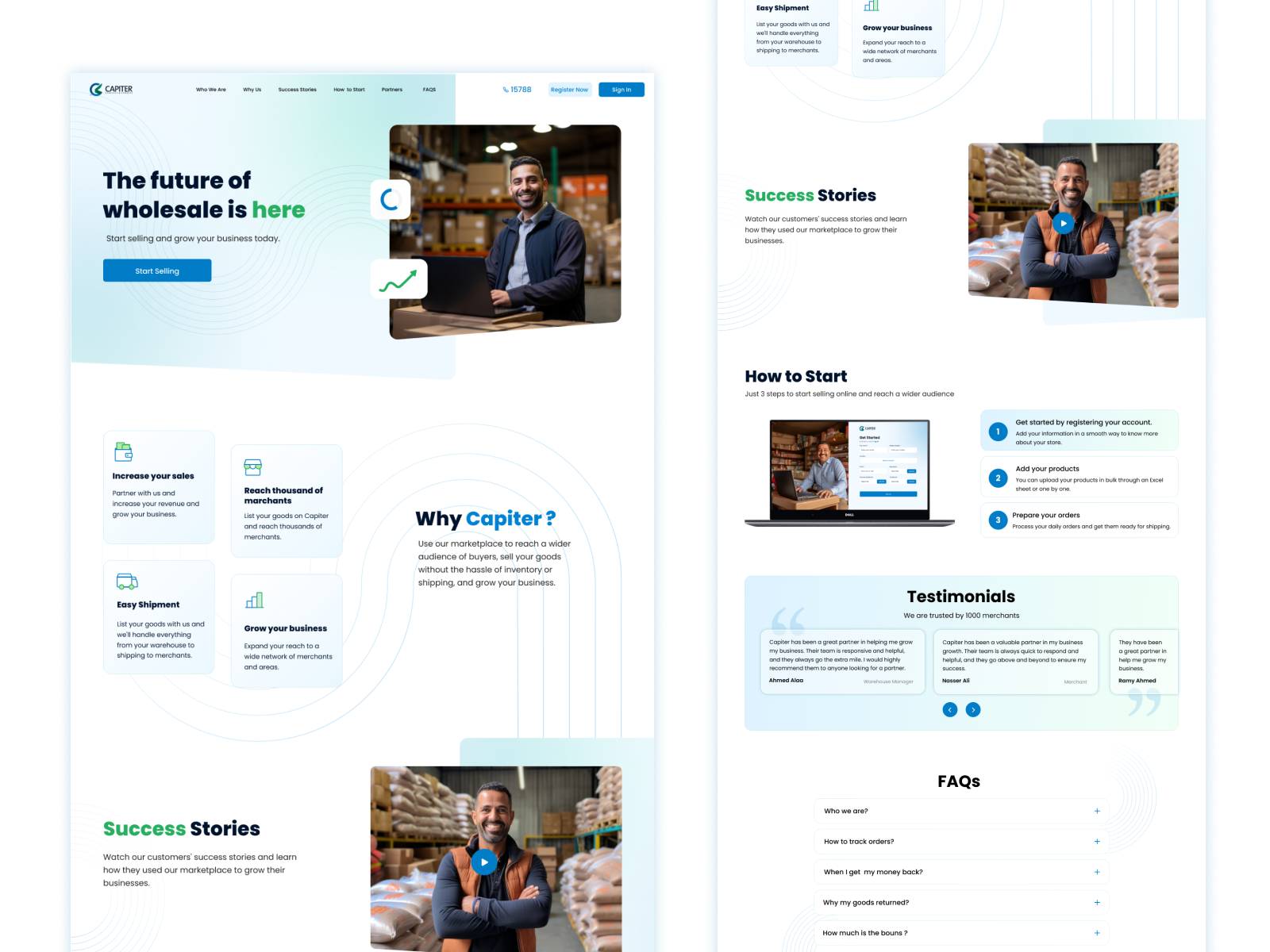
The existing experience needed to explain not only what Capiter offered, but why wholesalers should trust and use the platform.
Design decision
I restructured the landing experience to communicate value and reduce uncertainty before sign-up.
Key content
Clear product benefits
How it works
Success stories
Testimonials
FAQs
06 What Changed
What the redesign enabled.
More self-service
Wholesalers could manage more everyday operations independently.
Better visibility
Orders, payments, inventory, and returns became easier to understand.
Less operational friction
Better location capture could reduce manual verification effort.
07 Success Metrics
How we planned to measure success.
Together with the product team, we identified indicators that could show whether the new experience was solving the intended problems.
1
Number of verified wholesalers
2
Returned-product metric / return visibility
3
Order fulfillment rate
08 Reflection
What I learned.
This project changed how I think about B2B products. Designing for wholesalers wasn’t only about simplifying interfaces — it required understanding the operational processes behind them.
I learned that the most valuable improvements often came from giving users visibility and control over tasks that had previously depended on internal teams.